Game review
Dragonkin: The Banished
6.5 / 10
- Developer
- Eko Software
- Publisher
- Nacon
The short version
Biggest strengths
- Snappy, responsive combat that reviewers repeatedly describe as punching well above its price
- The Wyrmling companion and city-of-Montescail hub give the game a distinct identity in a crowded genre
- No monetization beyond cosmetics, free unlimited respecs, and a genuinely large amount of endgame content
Biggest weaknesses
- Passive skill trees are reported as near-identical across all four classes, undercutting the promised build diversity
- Death system (a hard six-death limit before forced return to town, plus max-HP reduction on death) draws consistent frustration, especially since key mechanics like item-rarity level-gating go unexplained in-game
- Oversized maps with sparse checkpoints turn exploration into repetitive backtracking for several reviewers
6.5 / 10
The Pitch
Dragonkin: The Banished is Eko Software's isometric action-RPG, a premium, single-purchase entry in a genre currently dominated by live-service giants. Four hero classes (Knight and Barbarian for melee, Oracle and Archer for ranged) hunt dragon-corrupted monsters across a world seeking the last Dragon Lords, while gradually rebuilding a mountain refuge city, Montescail, that doubles as a social hub for up to sixteen players. It exited Early Access into a full 1.0 release on 16 March 2026, having spent roughly a year in EA since March 2025, and its 1364 English-language Steam reviews land at Mostly Positive, 1051 of them positive. Reviewers who also played the earlier public demo describe a genuinely striking turnaround: several say the demo left them convinced the game would be bad, only to come back for the 1.0 launch and find something close to unrecognizable in a good way.
The Ancestral Grid and the Wyrmling
The two systems reviewers single out most as Dragonkin's real identity are the Ancestral Grid and the Wyrmling companion. The Grid is a hexagonal puzzle for slotting looted skills and modifiers, rewarding players who chain complementary keywords together rather than simply picking the biggest numbers, and multiple reviewers call it the standout mechanic once you've put in the hours to understand it. The Wyrmling, a customizable dragon pet earned early and equippable with its own armor and passive effects, draws comparisons to devotion or familiar systems in other ARPGs, and one detailed review calls it "the best companion system out of all the top ARPGs simply because it's free" from the outset rather than a late-game unlock. Not every reviewer is sold on its depth, though; one long, systematic critique dismisses it as "more mascot than meaningful system," mechanically shallow next to the promise of the concept.
A City Worth Building
Montescail, the city hub players expand and upgrade as they progress, is one of the most consistently praised elements across both positive and negative reviews. Reviewers describe instant, loading-screen-free fast travel around the city, a full stash from the start, and meaningful upgrade choices that boost crafting, experience and character stats, all wrapped around a space that stays genuinely populated in multiplayer rather than sitting empty between missions. Several reviewers frame this, alongside the total absence of microtransactions or a season-pass model, as the game's biggest differentiator from Diablo and Path of Exile: a premium ARPG that doesn't monetize power, paired with unlimited free respecs that reviewers repeatedly credit with making build experimentation genuinely low-stakes.
Repetition, Punishment, and Buried Rules
The most consistent complaint concerns how the game communicates and enforces its own systems. Death carries real weight: players get six deaths before being forced back to town, and each death permanently reduces max HP for that run, a design several reviewers find punishing without feeling earned, particularly since related mechanics, like item rarity being flatly locked behind character level rather than difficulty, aren't explained anywhere in-game and had to be pieced together from the community. A separate, frequently repeated criticism targets map design: several reviewers describe oversized maps with too few checkpoints or portals, turning what should be exploration into repeated backtracking across empty space, and one systematic critique notes that passive skill trees are functionally identical across all four classes, the same generic flat-damage and flat-health nodes regardless of who you're playing, undercutting the class-fantasy the Grid and Wyrmling otherwise build. A handful of reviewers go further, describing the moment-to-moment loop as effectively "stack modifiers around one skill and spam it" once the early build-experimentation novelty wears off.
Bugs, Balance Patches, and a Post-Launch Grind Controversy
Stability and balance draw mixed but specific complaints. Multiplayer parties report quest-progression bugs where an objective only counts toward completion for whoever is hosting, occasionally leaving other players' kills or interactions silently uncounted until the area is reloaded, and some reviewers describe real instability once a group reaches higher "Apocalypse" difficulty content. A more recent, sharply negative thread concerns a post-launch update that several reviewers say heavily nerfed the best resource-farming areas without adding new activities to replace them, turning crafting-material collection into what one detailed review calls an "extremely tedious task" rather than genuinely new endgame content. Set against that, plenty of reviewers report smooth, crash-free sessions with strong performance even on modest hardware, and multiple long-playtime reviews (several logged well over 100 hours) describe the developer actively patching specific community complaints between the demo and 1.0, and continuing to do so since.
Verdict
Dragonkin: The Banished earns its comparisons to Grim Dawn and Titan Quest more than to Diablo or Path of Exile, a smaller-scale, single-purchase ARPG that leans on a distinctive city hub and companion system rather than trying to out-scale the genre's biggest names. Reviewers who click with the Ancestral Grid's puzzle-like build crafting and the total absence of monetized power describe it as punching well above its price, and the well-documented gap between its rough public demo and a much-improved 1.0 release speaks well of the studio's responsiveness. What holds it back is repetition wearing through the systems that first impress: identical passive trees across classes, oversized maps that turn exploration into backtracking, and a punishing, under-explained death system that several reviewers feel exists more to pad playtime than to create meaningful stakes. If you've burned out on the live-service treadmill of the genre's biggest titles and want something smaller, premium and still being actively patched, it's an easy recommendation, just go in aware that a recent balance patch has some longtime players frustrated with where the grind currently sits.
Pros and cons
Pros
- Snappy, responsive combat that reviewers repeatedly describe as punching well above its price
- The Wyrmling companion and city-of-Montescail hub give the game a distinct identity in a crowded genre
- No monetization beyond cosmetics, free unlimited respecs, and a genuinely large amount of endgame content
- A well-documented turnaround: an early, poorly-received demo followed by a much stronger 1.0 release many reviewers were pleasantly surprised by
Cons
- Passive skill trees are reported as near-identical across all four classes, undercutting the promised build diversity
- Death system (a hard six-death limit before forced return to town, plus max-HP reduction on death) draws consistent frustration, especially since key mechanics like item-rarity level-gating go unexplained in-game
- Oversized maps with sparse checkpoints turn exploration into repetitive backtracking for several reviewers
- Multiplayer has reported quest-progression bugs where objectives only count for the party host
Screenshots
-
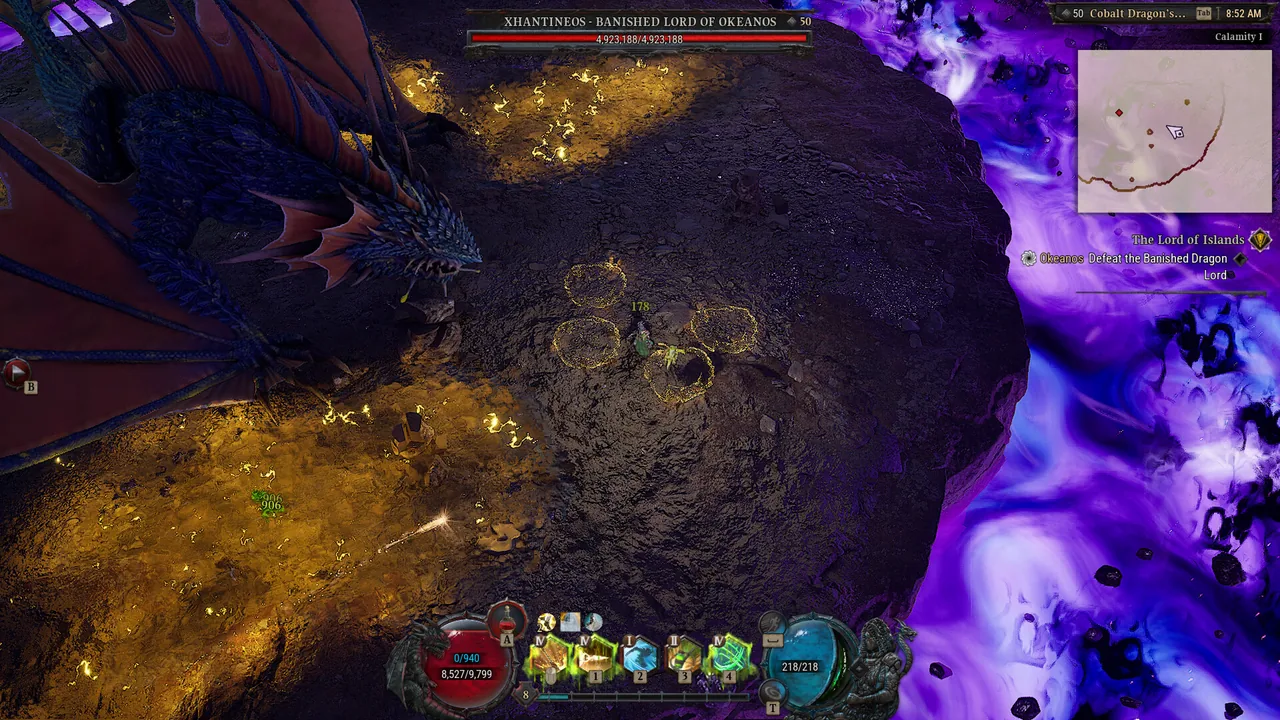
A dragon-lord boss encounter, one of the endgame's roughly 70 named bossesImage: Nacon via Steam -
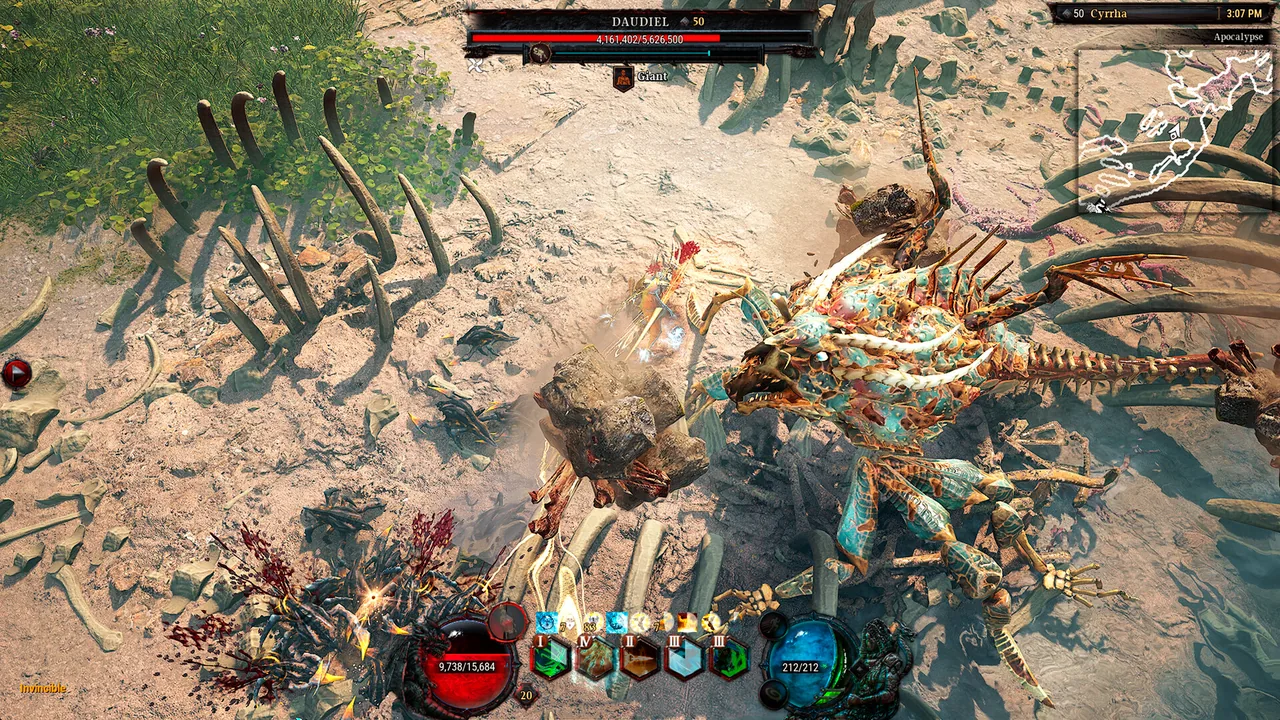
Apocalypse-difficulty combat against a heavily-armored dragon creatureImage: Nacon via Steam -
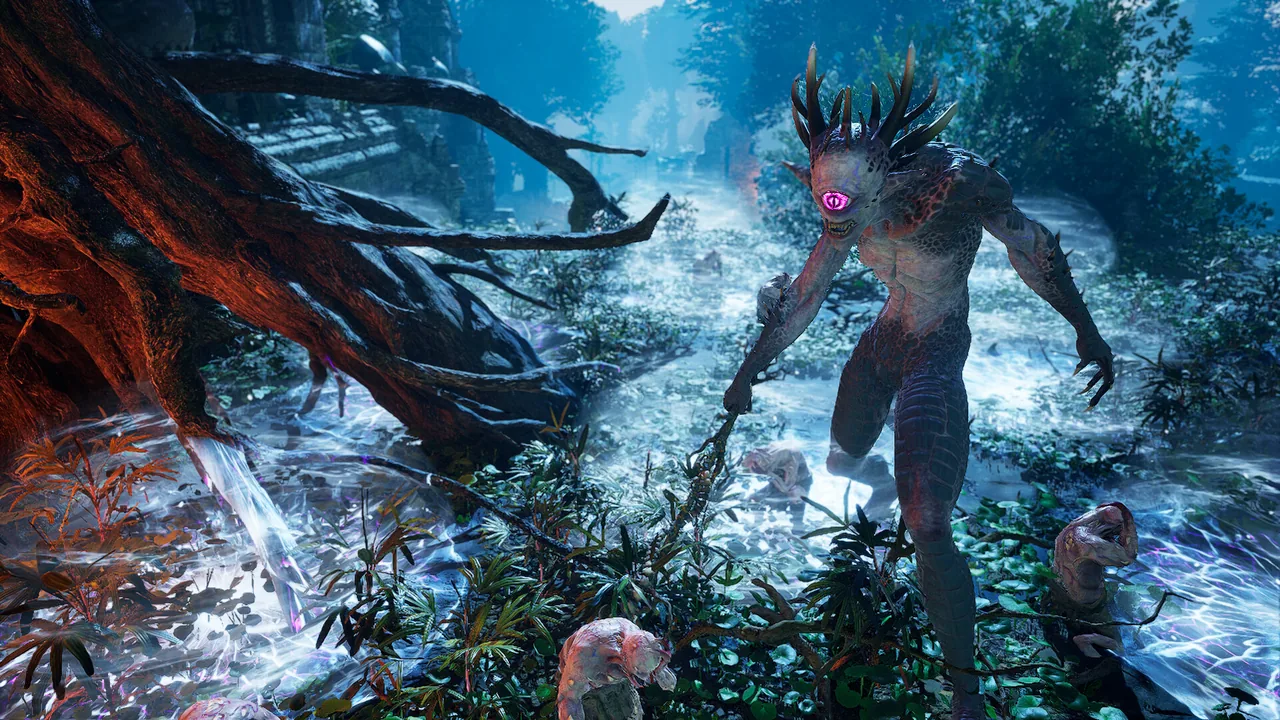
One of the dragon-corrupted creatures hunted across the game's ruined worldImage: Nacon via Steam -
Category scores for Dragonkin: The BanishedWanderer Game Reviews